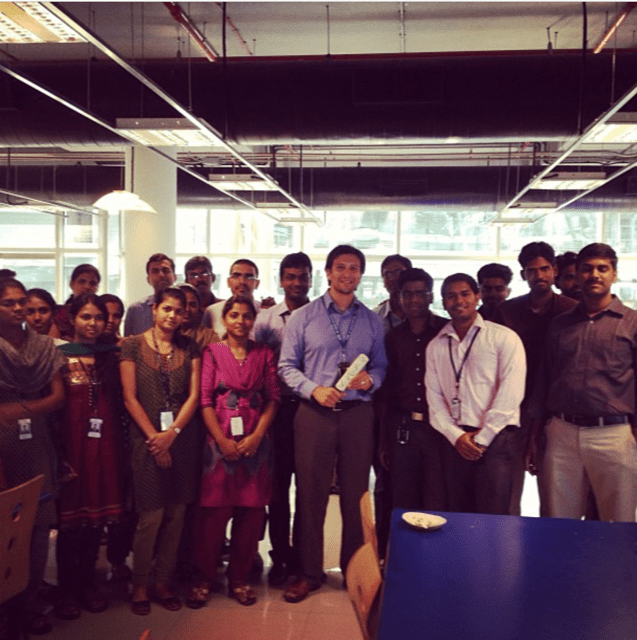
On a warm, muggy Friday evening in February 2013, I set foot on Indian soil after a 20+ hour flight from Texas. As I exited the Chennai International Airport, a waft of foreign air permeated my lungs while the sounds of horns honking and motorcycles humming created a cacophony of sound orchestrated from the hustling and bustling people of Tamil Nadu, Southeast India. Over the next 5 weeks, I would experience firsthand, how free trade worked in a global economy. I would spend my entire time in Chennai at the Siruseri Technology Park, a special economic zone established to provide duty-free trade activities in a designated area of the city. The purpose of my trip was to manage an extended team of outsourced Indian IT software engineers as we created value through building software for our customers back home in the United States. The idea of free trade agreements, whether they are multi-lateral, bi-lateral or established by a global political structure sets out to reduce barriers to trade between countries. Free trade agreements are designed with consumers in mind, but since consumers can also be local business owners and employees we must dissect our understanding of free trade to understand what the unintended consequences and impacts are to all parties involved.
Special Economic Zones
In the 90’s, India realized it had a competitive advantage. The size and scale of its software engineering workforce that could perform complex programming tasks at a fraction of the cost of other countries like the U.S, created a significant opportunity to export those services. This realization led to the creation of free trade zones and special economic zones where IT demand from developed countries like the U.S. could be exported to India and imported back to countries at almost 30 cents on the dollar. These free trade zones, played a significant role in the creation of wealth in India over the last several decades. According to The Economic Times (an Indian publication), India has enjoyed economic growth year over year for over a decade for its $150 billion outsourcing industry. For the U.S., this this type of labor trading has played a significant role in the maturation of the U.S. technology footprint in large Fortune 500 companies and has changed the way traditional organizations use technology to drive strategy. According to Fortune, spending on business software is expected to reach $4.5 billion in 2017, up from $3.8 billion in 2014. That is 17% increase in just three years. This doesn’t even account for the labor it takes to install, customize and maintain these applications. This growth and appetite for IT has contributed to the demand placed on companies to leverage knowledge workers at scale while remaining cost efficient. According to NeoGroup.com, over the last 20 years 8,000+ companies have benefited from these bi-lateral trade agreements and special economic zones while enriching the lives of millions of middle-class families in outsourcing countries whose income earners were employed as software developers. This seems like good business, but what are the impacts both positive and negative to the local economies of these countries?
Impact to Local Business Owners
Using the city, I live in as an example, let’s dissect both the pros and cons of free trade. According to the Huffington Post, while San Antonio, TX is the 7th largest city in the country it also estimates that roughly 20% of its population does not have a high school degree. Furthermore, even though over 843 tech jobs were added in San Antonio in 2016, it is still ranked 3rd compared to Austin (974) and Dallas (2,978) in terms of growth for technology jobs. From the view of a local technology company looking to grow and scale it’s IT services and products these numbers don’t provide enough of a surface area to attract and hire talent to meet the scaling demands of customers. This talent pool and scalability issue exists for local companies of all sizes. An outsourcing model, powered by free trade with India gives companies the ability to leverage a high-supply, high-skilled Indian workforce without being constrained locally while remaining cost competitive. A second benefit to local technology companies is organic innovation. As more technology is used to automate manual processes at a low cost using Indian labor, more focus can be placed on strategic innovation and business outcomes. Companies IT spend can start to move from cost-focused to a focus on enabling business growth through innovation.
There are downsides to free trade for local business technology companies. The biggest and most obvious downside is the loss of high-wage US technology sector jobs that are a result of outsourcing. According to Statistic Brain, in 2015 jobs lost to outsourcing for computer programmers/engineers was 211,700 which equated to $14.4 Billion in wages lost to American workers. Another less obvious, but growing issue for companies of all sizes is the growing change in how technology work is performed, and products are delivered. As the world transforms at an accelerated pace and methodologies for building software change to be more iterative and agile and less “waterfall” (traditional project management methodology), an outsourcing model that creates software the same way manufacturing parts are created no longer works as effectively as it did in the past. According to the New York times in an article published about how the US technology workers are starting to compete with traditional foreign outsourcing practices, speaks to the changing needs of how work in tech is done due to the need to be same time zone and provide a collaborative near face-to-face culture and environment. The last consequence of an outsourcing model powered by free international trade with India, is the loss of quality in the final product. Through my experience in leading teams that operated with an outsourcing function, I have seen degradation in the level of quality of solutions that were delivered from our 3rd party counterparts. This primarily is due to breakdown in communications, not following development life cycle standards and quality controls and lack of oversight for code quality base. Decision making about systems design and architecture is usually done better working side by side. While some development activities can be planned of time, the process of software development requires an organizational standard that must be adhered to and instilled in the culture of the workforce.
Free Trade Zones vs. Protectionism Future Narrative
There is a growing narrative around protectionism and national sovereignty that is being driven by a broad American frustration with decades of wage stagnation and growing income inequality. As I have shown in the data above, there are job losses due to outsourcing which impact real American lives. These types of stats along with a growing number of non-IT jobs (i.e. manufacturing) lost to automation contributes to a growing attitude toward a more protectionist stance over the transnational benefits that come along with free trade agreements. As global political structures like NAFTA, EU and WTO become more influential in a globalized economy, national sovereignty concerns may seem to be on the rise. Today, debates and opinions among nation sovereignty, protectionism and free trade agreements have a heightened sense of anxiety. These conversations have become politically charged with campaigns and elections being run and won on protectionists ideologies yet lack the depth and breadth of a non-zero-sum approach to balance. According to the Hoover Institution, the wedge issue for the 2016 primary campaign among republicans was the rising hostility to free trade. For decades republican and democratic parties have pushed for open U.S. and global markets, however resentment to free trade now has become a political narrative on both sides of the aisle.
I believe that in a world of hyper globalization, technology acceleration and domestic competition, protectionism as a strategy in a globalized world is extremely short-sighted. I believe in the next 10 to 20 years, transnational organizations will become more influential and protectionism will continue to enable a status-quo mindset while trying to protect the inevitable. To close out, it is my opinion that there must be balance for any country as it engages in protecting its national sovereignty, there also must be a healthy level of free trade to drive innovation, better products and a more wholistic approach to global social, political and economic well-being. John F. Kennedy said it best, “If a free society cannot help the many who are poor, it cannot save the few who are rich”.
Sources :
McLellan, Charles. (2017, October 2). IT Budgets 2017-18: What the surveys tell us
http://www.zdnet.com/article/it-budgets-2017-18-what-the-surveys-tell-us/
Vashistha, Atul. (2014, January 2). Free Trade Zones and Their Implications On Outsourcing
http://www.neogroup.com/open-water-free-trade-zones-game-changer-in-the-outsourcing-business/
Casura, Lily. (2017, October 9). In San Antonio, Nations 7th Largest City, More than 100k Lack a 9th Grade Education
Gustafson, Sara. (2017, January 3). Model : US and India Would Benefit From Bilateral Free Trade Agreement
http://www.ifpri.org/blog/model-us-and-india-would-benefit-bilateral-free-trade-agreement>
Sachitanand, Rahul. (2017, January 15). India’s $150 billion Outsourcing Industry Stares At An Uncertain Future
Vanian, Jonathan. (2015, October 17). 5 Important Predictions About Business Technology Spending
http://fortune.com/2015/10/16/five-interesting-tidbits-business-technology-spending/>
Mosbrucker, Kristen. (2017, April 3). This Texas city beat San Antonio and Austin for tech job growth in 2016
Statistic Brain. (2017, March 6). Job Overseas Outsourcing Statistics
https://www.statisticbrain.com/outsourcing-statistics-by-country/
Lohr, Steve. (2017, July 30). Hot Spot For Tech Outsourcing: The United States
https://www.nytimes.com/2017/07/30/technology/hot-spot-for-tech-outsourcing-the-united-states.html
Davis, Bob. (2016, March 9). Free Trade Loses Political Favor
https://www.wsj.com/articles/free-trade-loses-political-favor-1457571366
 Bluescoder I/O
Leave a comment